Table of contents
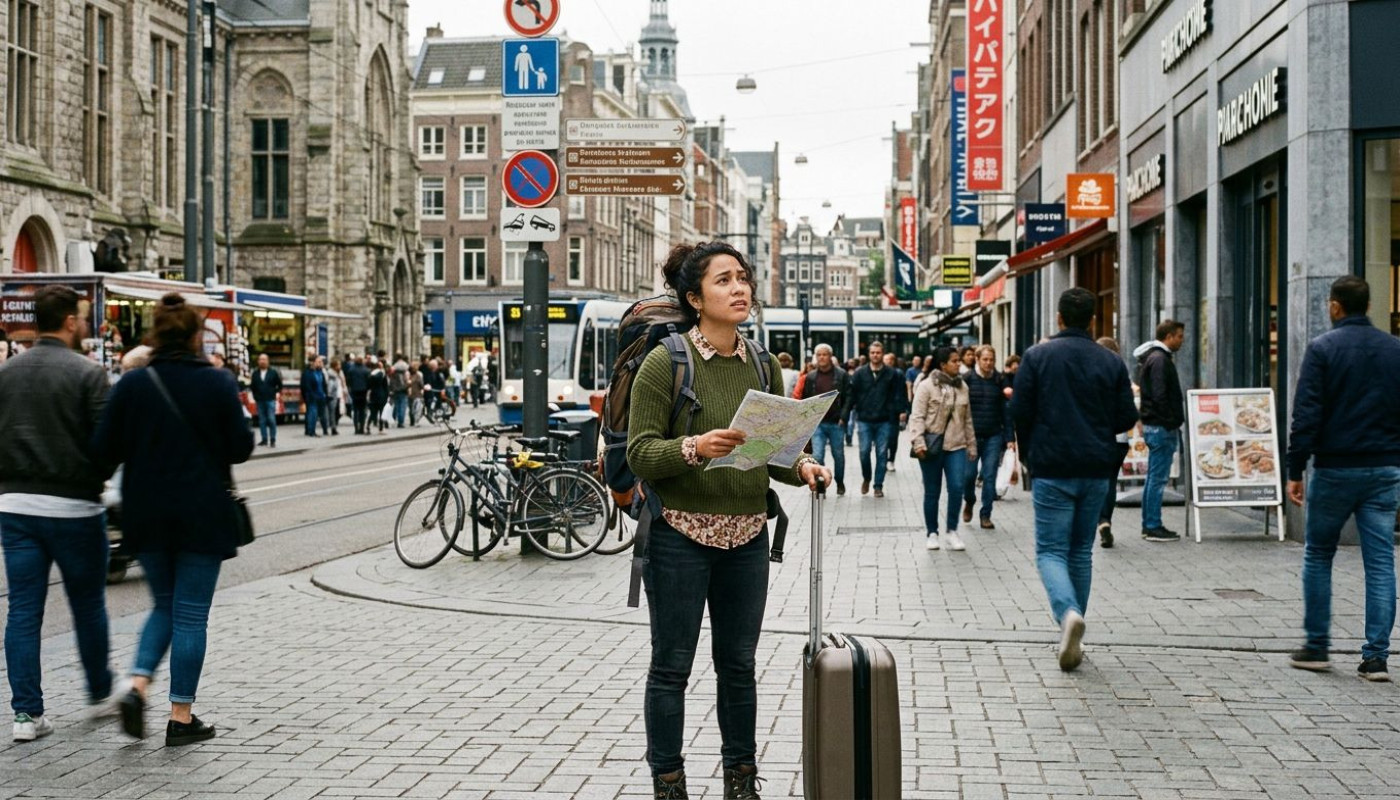
Moving to a new city is supposed to be exhilarating, yet the first weeks often feel like walking into an invisible rulebook you never received, and that friction has a name: culture shock. Long treated as a cliché of international moves, it is increasingly documented as a measurable stressor that can affect health, productivity, and even the odds of staying put. In a world of hybrid work and accelerated mobility, the real question is no longer whether culture shock exists, but how quickly newcomers can decode a city’s rhythms, services, and social codes.
Culture shock hits closer than you think
It is not just about language, or about being “open-minded”. Culture shock often starts in the mundane: how you queue, how you greet, how loudly you speak on public transport, and how quickly you are expected to get things done. Researchers have long described a pattern, from an initial “honeymoon” phase to frustration and adjustment, and while individuals vary, the underlying mechanism is consistent: when familiar cues disappear, the brain works harder to interpret everyday life, and that cognitive load becomes stress.
That stress is not theoretical. The American Psychological Association has repeatedly linked major life changes, including relocation, to increased anxiety and depressive symptoms, while broader public health research shows that stress can impair sleep, concentration, and immune function. In workplace terms, the costs show up fast: Deloitte and other consultancies have pointed out that global mobility failures, when employees return early or underperform due to poor adjustment, can be expensive for employers and destabilising for families. Even domestic moves carry risk, because cities can feel like different countries, with their own unwritten etiquette, administrative systems, and social boundaries.
What makes city-to-city shock so underestimated is that it hides behind a shared passport or a short flight time. A Parisian relocating to Geneva, or a Londoner moving to Zurich, may arrive convinced that “it’s basically the same”, then stumble on differences in bureaucracy, neighbour relations, customer service norms, childcare structures, and housing rules. The newcomer is not failing; they are recalibrating. And that recalibration takes time, energy, and usually, better information than a few tips from friends.
The data shows relocation is a stress test
Relocation is one of those life events people romanticise, until the paperwork lands. Numerous surveys place moving among the most stressful experiences, alongside divorce, bereavement, and job loss. In the UK, for example, the Office for National Statistics has tracked migration patterns and household mobility, and while it does not measure “stress” directly, it documents the scale of churn that feeds the phenomenon, especially among young adults and internationally mobile workers. In the US, moving-related stress has been discussed for decades in clinical and social research, and the theme is remarkably stable: uncertainty, loss of social support, and administrative complexity predict distress.
International mobility adds extra layers. Language barriers are the obvious one, but systems are the real trap: health insurance rules, residency permits, tax registration, school admissions, bank onboarding, and tenancy law. Each step is manageable in isolation, yet together they form a tight timeline, and the penalty for missteps can be costly. Miss a deadline, sign the wrong lease clause, choose the wrong insurance model, and suddenly the “exciting new chapter” starts with financial losses or weeks of delay.
Employers and universities increasingly acknowledge this. Orientation programmes have expanded, and many companies now offer settling-in assistance, not as a perk but as risk management. The goal is simple: reduce the time it takes for someone to become functional and socially anchored. The faster a newcomer understands how the city works, the less likely they are to spiral into chronic stress, and the more likely they are to perform at work, integrate in school, and build routines that make the move sustainable.
One detail often overlooked in the numbers is family impact. Partners who struggle to find networks, or children who face abrupt school transitions, can turn a move into an ongoing crisis. Studies in expatriate adjustment have repeatedly noted that family wellbeing is a strong predictor of assignment success. City culture shock, in other words, is not a personal weakness; it is a systems problem that needs a systems response.
When the city’s rules stay unspoken
Every city has its own “operating system”, and newcomers rarely get a user manual. Take housing: in many markets, the competition is not only about price, but about documentation, credibility, and timing. In Swiss cities, for instance, applicants may face tight viewing windows, detailed dossiers, and expectations that surprise people coming from more informal rental cultures. Add local norms about quiet hours, waste sorting, and communal spaces, and the learning curve becomes steep, even for highly educated professionals.
Then there is the administrative choreography. Registering your address, securing the right permits, understanding health coverage obligations, setting up utilities, and navigating school or childcare options can feel like a chain reaction, where one step blocks the next. People often lose days simply because they do not know which office to contact first, which documents must be translated, or what counts as acceptable proof of income or residence. Culture shock is amplified by time pressure: the more urgent the need, the harsher the friction feels.
Social life, too, is shaped by codes that locals rarely explain. How quickly do friendships form? Is small talk expected, or viewed as intrusive? Are neighbours distant, or community-oriented? Some places reward discretion and predictability, others prize spontaneity; newcomers misread the tone, then assume rejection where there is only a different rhythm. Digital life can mislead here, because online friendliness does not always translate into offline inclusion, and the gap can be emotionally brutal during the first winter or the first holiday season away from home.
For those relocating to Switzerland, the gap between the country’s global image and daily reality can itself be a shock. High living standards come with high costs, and efficiency can come with strict rules. Getting help early can reduce that friction dramatically, whether it is through employer support, local networks, or specialised guidance such as www.my-swiss-relocation.com, which sits at the intersection of practical logistics and on-the-ground know-how that newcomers often lack when they arrive.
How newcomers can regain control fast
You cannot eliminate culture shock, but you can shorten it. The most effective strategy is to treat the first month like a structured project, not a vague adaptation period. Start with the non-negotiables that unlock everything else: legal registration, housing stability, health coverage, banking access, and schooling or childcare if relevant. Build a timeline backward from deadlines, and keep a single folder, digital and paper, for every document, because cities love paperwork, and repetition is the rule rather than the exception.
Budgeting matters more than people expect. Even affluent households can be surprised by deposits, agency fees in some markets, temporary accommodation costs, and the price of furnishing a new place. Create a relocation buffer, and assume overlap: you may pay rent in two cities for a month, or need short-term storage, or face higher transport costs while learning routes. If your move is linked to a job, ask explicitly what is reimbursed, what requires receipts, and what counts as a taxable benefit, because the difference can be significant.
Integration is not only a social goal; it is a mental health tool. Schedule activities that create repetition, such as a weekly sports club, language exchange, volunteering, or a class. Repetition builds familiarity, and familiarity reduces stress. Keep contact with home, but avoid living entirely in a bubble of old friends and expats, because that can delay the moment when the city starts to feel readable. Small wins matter: learning the local greeting norms, understanding how to book a doctor, or mastering the recycling system can provide a sense of competence that counters the helplessness culture shock feeds on.
Finally, know when to seek help. If sleep collapses, anxiety spikes, or conflict rises at home, do not wait for it to “pass”. Many cities offer newcomer services, employee assistance programmes, and mental health support. Practical guidance also counts as prevention: the fewer hours you spend stuck in administrative limbo, the more energy you have to build a life, rather than just survive the move.
Turning a move into a landing
Plan early, and book key appointments before arrival when possible, especially housing viewings, registration slots, and school visits. Build a realistic budget that includes deposits and temporary costs, and check which employer packages or public aids apply to your situation. The faster the basics are secured, the sooner culture shock becomes curiosity, not crisis.
Similar articles
What Local Elections Mean For Leisure Facilities In Your City

Exploring The Role Of Stable Diffusion Models In Modern Visual Arts

Mastering the Art of B2B Content Marketing

Success Secrets of High-Performing B2B Companies

AI: The Game-Changer in B2B Sales

Revolutionizing Customer Experience in B2B Ecommerce
